
I’ve been in lead generation for almost 30 years, and one thing that still surprises me is how many people will spend thousands of dollars buying leads without knowing much about where those leads actually came from.
They want to know the price, the volume, and how quickly they can get them…
But ask them whether they can prove the person actually agreed to be contacted, and that’s where things get interesting.
You can buy 10,000 leads tomorrow. Names, phone numbers, email addresses, whatever information you need.
But what happens when somebody picks up the phone and says they never requested anything?
Now you’ve got a problem.
And telling them you bought the lead from somebody else isn’t necessarily going to get you out of it.
Buying a Lead Doesn’t Mean You Have Permission to Contact Someone
This is something more businesses need to understand.
Just because somebody filled out a form doesn’t automatically mean you have permission to call them, text them, or email them about whatever you’re selling.
What did they actually agree to?
If somebody requested a homeowners insurance quote, that doesn’t necessarily mean they agreed to receive calls about personal loans.
If they entered a sweepstakes, that doesn’t automatically mean every company that purchases their information can start calling them.
The consent language matters. Who was identified, what the consumer agreed to, and how that information was collected all matter.
And when you’re buying leads from multiple sources, keeping track of that information can get complicated pretty quickly.
The Problem Isn’t Always the Lead. It’s What You Can Prove.
I’ve worked with publishers, lead buyers, call centers, and all kinds of different traffic sources over the years.
A lead can pass through several companies and systems before it ever reaches the person making the call.
By that point, the call center might have a name, a phone number, and a few other details.
But does anybody know what the original landing page looked like?
Do they know what the consumer agreed to when they submitted their information?
And more importantly, can they actually produce that information if somebody challenges it?
Because that’s where things can get expensive.
You can tell somebody all day long that your publisher generates compliant leads. Maybe they do.
But if somebody files a complaint and you can’t produce the documentation supporting the contact, you’ve got a much bigger problem than a bad lead.
This Gets Complicated When You’re Buying Leads at Scale
If you’re buying a handful of leads from one company, it’s relatively easy to keep an eye on where they’re coming from.
Now start buying from 10 or 20 different sources.
Some of those companies have their own publishers. They’re running different landing pages, different campaigns, and different offers.
Things change.
Somebody updates a form. Somebody starts sending traffic from a new website. Another publisher changes the consent language.
Meanwhile, you’re still buying leads and your call centers are still making calls.
You can’t just assume everything is being handled correctly because somebody told you it was.
And you certainly don’t want to discover there’s a problem after you’ve already contacted thousands of people.
Why We Built Validiform
A lot of the software we’ve developed over the years came from problems we needed to solve in our own businesses.
We operate in lead generation, email, SMS, call centers, and software. We’ve dealt with the challenges that come with moving leads between different companies, systems, and buyers.
And one of the things that matters in that process is knowing whether you have documentation supporting the consumer’s consent.
That’s where Validiform comes in.
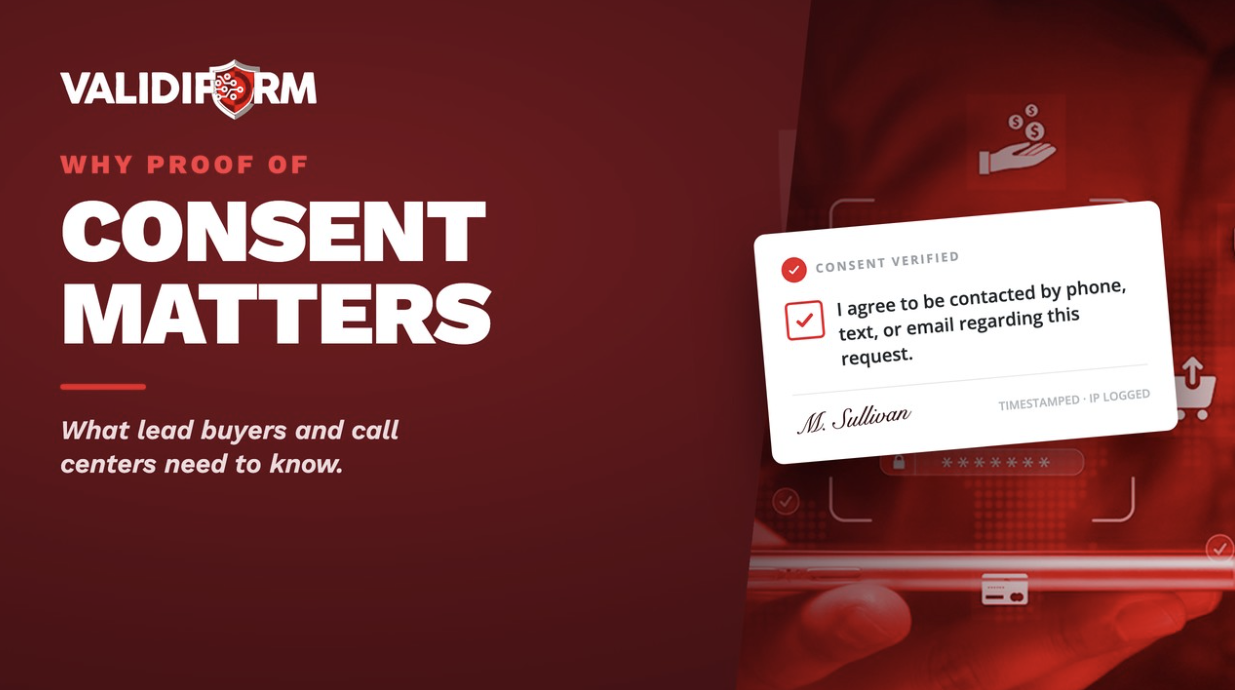
Validiform was developed to help businesses address consent validation in lead generation.
Because a phone number and an email address don’t tell you the whole story.
You need to understand where that information originated, what the person agreed to, and whether the available records support the type of outreach you’re planning.
And you need to be able to get to that information when it matters.
I don’t believe businesses should wait until somebody files a complaint before they start asking those questions.
Cheap Leads Can Turn Into Expensive Problems
I’ve seen people get so focused on the cost of a lead that they forget to look at what they’re actually buying.
One company offers leads for 50 cents. Another wants $5.
Everybody wants the cheaper leads.
I get it. When you’re buying volume, those numbers add up.
But there’s a difference between buying inexpensive leads and buying leads that are actually worth something to your business.
If the information is bad, your agents waste time.
If the consumer never requested what you’re offering, you’re probably not going to get very far.
And if you can’t substantiate the consent you’re relying on, you could be exposing your business to problems that cost a whole lot more than whatever you saved on the leads.
I’m not saying expensive leads are automatically better.
I’m saying price shouldn’t be the only thing you’re looking at.
Know What You’re Buying
If you’re buying leads, ask your publishers where they’re coming from.
Find out what they’re documenting.
Look at the actual landing pages and consent language. Make sure you understand who the consumer agreed to hear from and how they agreed to be contacted.
And don’t assume a lead is good just because somebody delivered it to you.
We’ve spent years building businesses around leads, calls, email, and SMS. I know how much time and money goes into generating traffic, converting that traffic into leads, and getting those leads to the right people.
But none of that changes the fact that you need to know what you’re buying.
If you’re spending thousands of dollars on leads every month and you have no idea how you’re going to prove consent when somebody questions it, that’s something I’d be addressing before buying another 10,000.